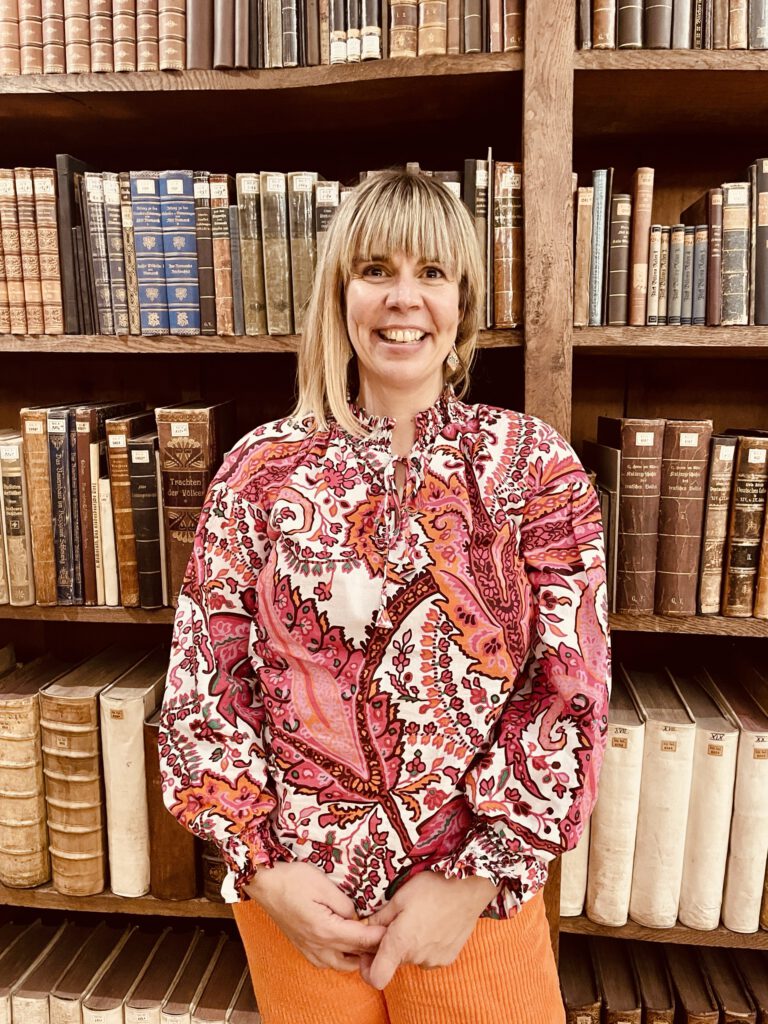
Sabrina Görlitz
I’m a writer, hospice companion and lecturer for biography work in palliative care, with a deep appreciation for all life stages but particularly for our final chapters. A time when we reflect on the experiences and events of our life, and often wish to share them with those we love.
I developed and named this process ‘Palligraphy’ – a unique form of end-of-life biography. Using elements from Chochinov’s Dignity Therapy along with techniques from classical storytelling, I am able to gently weave together the life stories of those experiencing end-of-life palliative care.
Telling, reflecting on and documenting one’s own life story in the face of approaching death can bring insight, coherence, and harmony to both the storyteller and for those the stories are told.
The booklet produced through the palligraphy process makes a wonderful and precious gift that can be passed on to family and friends.
My Story:
I was born in the heart of Schleswig-Holstein (close to the Danish border) and to this day I prefer proximity to the sea. After studying journalism and media communication in Hamburg, I moved to Dublin where I worked as a project coordinator for the Irish Cancer Society. The Irish are wired for storytelling – one of many reasons I call Ireland the home of my heart. I’ve always believed in the transformative power of stories which drew me first towards journalism, then to the unique beauty of our own quiet life stories. I created my own personal niche in “palliative journalism” allowing me to transform my vocation into my profession.
Like many, from an early age death and dying have frightened and fascinated me. Raised in Western culture, these topics were feared and avoided. Looking back, I wish that ‘death education’ had been available to all. I believe it would offered me and others an understanding to our own transience and for those we love. As a mother, this wish became more urgent. It made me question, “What can I do now, at the beginning of his life, to prepare him for the end?”
To answer this question, I completed several courses in palliative care and started working in hospitals and hospices in Hamburg as a “story nurse”. Sitting at the deathbed of many different people with very diverse stories, I began to see how storytelling can effect the process of dying itself. What keeps us holding on, and what helps us to let go.
With both direct and open-ended questions, I work with those in the process of dying to help them determine what is important to them in the face of approaching death, what they believe in, what they hope for, and what they want to remain of them. We marvel together at the miracles of both life and death and try to find words for them. Most of the time, this helps us both to be a little less afraid of the unknown and a little more curious about what is to come.
If you would like more information of my work, please read my book (both in print and on Audible – both only in German at this time).